
Burst pipe or supply line
Clean water, fast response, and often fully dryable if caught early. Shut the water off at the main before anything else.
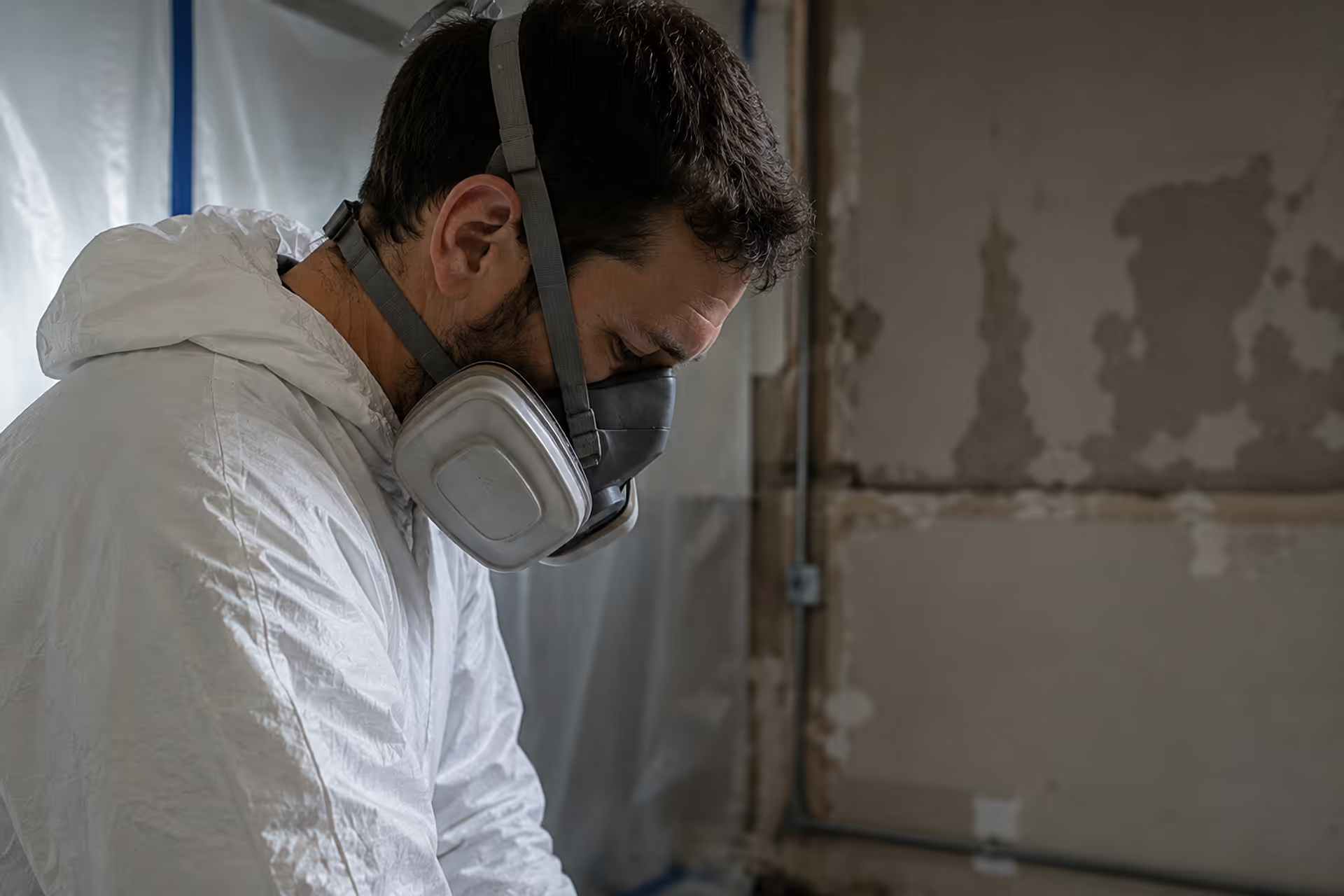
Local restoration companies
Connect with local restoration companies serving your area. Tell us about the water, fire, mould or storm damage and we will help you compare professionals who handle mitigation and rebuild.
Start with restoration contractors that serve your area, not a storm-chasing crew that will be gone before problems surface.
Same drying goal, same materials removed, same reconstruction line. Two scopes that do not match cannot be compared on price.
Tell us the loss, the timeline and the zip code. We follow up about connecting you with relevant local professionals.
Your details are not passed to a restoration company unless you agree. Submitting an enquiry is not a work authorisation.

Speed matters for drying, not for signing. You can have equipment running today and still take your time choosing who does the rebuild.
Get Help With Your Restoration ProjectThe first 24 hours
Almost every expensive mistake in a restoration claim is made in the first day — usually by doing the right things in the wrong order. This is the sequence that protects both the building and the claim.
How it works
Four steps. You stay in control of who comes to the house and whether you hire anyone.
Water damage, fire, mould, storm damage or reconstruction — plus the zip code so we know which local restoration companies are relevant.
We follow up about connecting you with restoration contractors serving your area. Nothing is sent to a company unless you agree.
Ask for the same written scope: what is being dried, the drying goal, what is being removed, and whether reconstruction is included or separate.
Pick the restoration company that matches the loss, the documentation standard and the way you want the claim handled — or keep researching.
Damage types
The category of loss changes the method, the safety requirements and the paperwork. Start with the damage you have, then compare local restoration companies on that scope.
Classified by how clean the water was and how much material it reached. Clean supply-line water, grey water from appliances and contaminated water each carry different handling and disposal requirements.

Air movers and dehumidifiers sized to the space, with daily readings against a target. Equipment left running without a log is not drying — it is noise.

Containment, negative pressure, HEPA filtration and removal of affected material. Some states licence mould work separately and restrict the same firm from both testing and remediating.
Soot behaves differently depending on what burned, and odour travels far beyond the visible damage. Contents cleaning is usually a separate scope from the structure.

Wind, hail and flood are frequently different perils under different policies — and standard homeowners policies generally exclude flood, which is covered separately.

Putting the building back. A different discipline from mitigation, priced differently, and the phase where you have the most time to compare bids.
Money
Restoration is usually two invoices — mitigation and reconstruction — and they are priced on completely different logic. Mitigation is equipment, labour and time. Reconstruction is a building job.
Insurance
A restoration claim is a construction project and an insurance process running at the same time, at the worst possible moment. Knowing how the second one works is what keeps the first one from going wrong.

Policies generally require you to prevent further damage once you know about it. Reasonable emergency steps are expected — and are usually covered.
The adjuster assesses what the policy covers and writes a scope. Your contractor writes theirs. Where the two differ, the difference is negotiated, not simply absorbed.
Damage hidden behind materials is found after demolition. Additional items are submitted as a supplement, with documentation. This is normal, not a red flag.
Standard homeowners policies generally exclude flood, which is written separately — commonly through the National Flood Insurance Program. Water from above and water from outside are different perils.
An assignment of benefits transfers your right to your insurance payout to a contractor, who then deals with your insurer directly. It is legal in most places and sometimes genuinely convenient — but it hands over your control of a claim on your property, and it has been the centre of enough abuse that several states have legislated to restrict it. Read anything presented as “just so we can bill your insurance directly”, and take the time to check whether it is a work authorisation or an assignment. A reputable company will wait while you read it; that willingness is itself the test.
Insurance Information Institute — filing a homeowners claim · Checked August 26, 2026
Photographs before anything moves, a written log of who attended and when, every receipt, and copies of every document you sign. Homeowners who keep their own file consistently have easier claims than those relying on someone else’s.
Get Help With Your Restoration Project
Choosing a professional
Restoration is the one home-service category where you are choosing under pressure, often from whoever arrived first. A short list of checks holds up even at midnight, and local professionals who will still be there after a storm crew leaves are worth preferring.
We publish no company profiles or ratings, because in this trade an unearned recommendation reaches people at their most vulnerable. The framework below is what we are building instead, starting from licensing records and certification bodies rather than from marketing.
Ticked rows are what our research covers today. Being listed somewhere is not verification, and we will not present it as any.
Get Help With Your Restoration ProjectExample comparison
Placeholder companies, invented values. The rows are what to check when two firms are already parked outside and you have an hour to decide, not a week.
| Criterion | Company A | Company B | Company C |
|---|---|---|---|
| Certification | IICRC water + drying | Unstated | IICRC water + mould |
| Written scope first | Yes | Verbal only | Yes |
| Daily moisture logs | Provided | On request | Provided |
| Paperwork requested | Work authorisation | Assignment of benefits | Work authorisation |
| Does reconstruction | Yes, optional | Yes, required | Refers out |
| Local address | In county | Out of state | In county |
| Named contact | Yes | Call centre | Yes |
Example layout only. These firms are fictional and the entries invented purely to demonstrate the format. Nothing above evaluates a real restoration company.
By situation
What changes depending on what happened.
Clean water, fast response, and often fully dryable if caught early. Shut the water off at the main before anything else.
Contaminated water. Different safety requirements, more material removed, and not a do-it-yourself situation at any scale.
Cover it, then dry it. Wind-driven rain and flood are different perils, and which one it was affects coverage.
Often discovered late, under cabinetry and flooring. The visible damage is usually the smaller part.
Smoke and odour travel far beyond the burn. Contents and structure are usually two separate scopes.
Stop, contain, and check your state’s licensing rules before anyone disturbs it further.
The measurable part
The difference between a restoration that ends and one that comes back as a mould claim in six months is whether anybody wrote the numbers down.
Set from unaffected materials in the same building. Without a target, “dry” is an opinion, and it is usually the opinion of whoever wants the equipment back.
Moisture content of materials, not just room humidity, recorded per location per day. You should receive this log.
Air movers and dehumidification calculated for the volume and the class of loss, not whatever was on the truck.
Wall cavities, under floors and behind cabinetry hold water long after the surface reads dry. This is where recurrence starts.
If nobody has shown you a moisture reading, nobody has shown you evidence. Ask on day one — the request itself changes how the job is run.
Get Help With Your Restoration Project Local restoration companies
The same burst pipe is a different job in Houston and Denver, and the same flood is a different claim in different states. Local restoration companies already know the humidity, the flood rules and the licensing that a national average cannot capture.
Every state is a different question
Hover or tap a state. Highlighted squares are where our first state guides are being written.
Stylised tile map — each square is a state, not a land area. State guides are in progress. Until yours exists, your state department of insurance governs the claim, your building department the rebuild, and your state licensing agency who may legally touch mould.
The process
Five steps. You have more control over steps four and five than it feels like on day one.
Utilities off if needed, water stopped, opening covered. Safety before property, every time.
Photographs and video of every affected area before anything is moved or removed.
Notify the insurer, get the claim number, and start emergency drying under a limited authorisation.
Written scope reconciled between contractor and adjuster before reconstruction begins.
Compare reconstruction bids, confirm final moisture readings, and keep every document for the file.
Questions
6 of the common questions homeowners ask, with the rest on the FAQ page. Every answer here is the one we would give a friend, which sometimes means the answer is “it depends, and here is what it depends on.”
Make the property safe, stop the water at the source, then document everything with photographs and video before anything is moved. Notify your insurer and ask what the policy requires of you. Emergency drying can begin straight away under a limited authorisation — it is the full contract, not the mitigation, that can wait until you have read it.
It depends on the peril and your policy. Sudden accidental discharge — a burst supply line, for example — is commonly covered, while gradual leaks and general wear often are not. Flood is usually excluded from standard homeowners policies and covered separately. Your deductible, and whether you hold replacement cost or actual cash value, decide what actually reaches you.
It is measured rather than scheduled. Equipment runs until moisture readings in the affected materials reach a goal set from unaffected materials in the same building. Several days is common for a contained loss; assemblies that trapped water take longer. If nobody can show you a reading, nobody can tell you how long it will take.
It transfers your right to the insurance payout to the contractor, who then bills and negotiates with your insurer directly. It is legal in most places and can be convenient, but it hands over control of a claim on your property, and several states have legislated to restrict it after widespread abuse. Read it carefully, check whether what you are being handed is actually just a work authorisation, and do not sign anything on a doorstep.
Generally no. Insurers maintain preferred vendor programmes, and those companies are often perfectly good, but in most cases you choose who works on your property. Your insurer decides what it will pay, not who holds the tools.
We read the loss type, the zip code and anything you noted, then follow up about next steps. Company matching is still being built, so this is not an emergency dispatch line. You should hear from us about your question and, where we can, about connecting you with restoration companies that serve your area. Your details are not sold, and no contractor receives them unless you agree.
Our approach
HyreRestore is an independent resource for homeowners dealing with property damage. We focus on the decisions and the sequence — what to do first, how drying and reconstruction work, where insurance fits, and how to judge a restoration company — and on connecting people with local restoration professionals when they are ready to get quotes.
Process and safety claims are sourced to industry standards bodies and federal health and emergency agencies, and the references are on the page.
Nothing here is written to make a bad day feel worse. Restoration marketing runs on panic; guidance should not.
Where we cannot verify something, the page says so. People arrive here in an emergency; that is precisely when invented certainty does the most damage.
We expect to earn revenue by introducing homeowners to restoration companies. That will be disclosed where it applies, and it will not shape what we say about drying, scope or claims.
Every factual claim above traces to one of these. Content reviewed . How we source and correct that work is in the editorial policy.
Get quotes
Tell us what happened and where you are. We will follow up about connecting you with restoration contractors serving your area.
Straight answer about what happens next: our company matching is still being built, so this is not an emergency dispatch line. If your property is actively flooding or unsafe, call a local restoration company or your insurer’s emergency number now. Tell us the project and the zip code if you are past that point. We will help you think it through, and nothing is passed to a restoration company unless you agree.
Read the First Steps